





How to Care for Kitchen Textiles: Why Proper Care Makes All the Difference
Anyone who chooses high-quality kitchen textiles wants to enjoy them for a long time. Kitchen towels, dishcloths, polishing cloths, and aprons serve many different purposes in everyday life. They come into contact with water, food, and various surfaces, and are washed regularly. That’s precisely why proper care is an essential part of using them from the very beginning.
With FLAVOUR & FLAIR, VOSSEN is expanding its Austrian textile expertise to include a Fine Kitchen Collection for the first time. The new product line brings the same standards of quality, functionality, and design from the bathroom to the kitchen. To ensure that kitchen textiles retain their material properties for as long as possible, hygiene and daily care play an important role.
Hygiene starts right after use
Kitchen hygiene doesn't start with the washing machine. Often, how you handle kitchen linens immediately after use determines how fresh they stay.
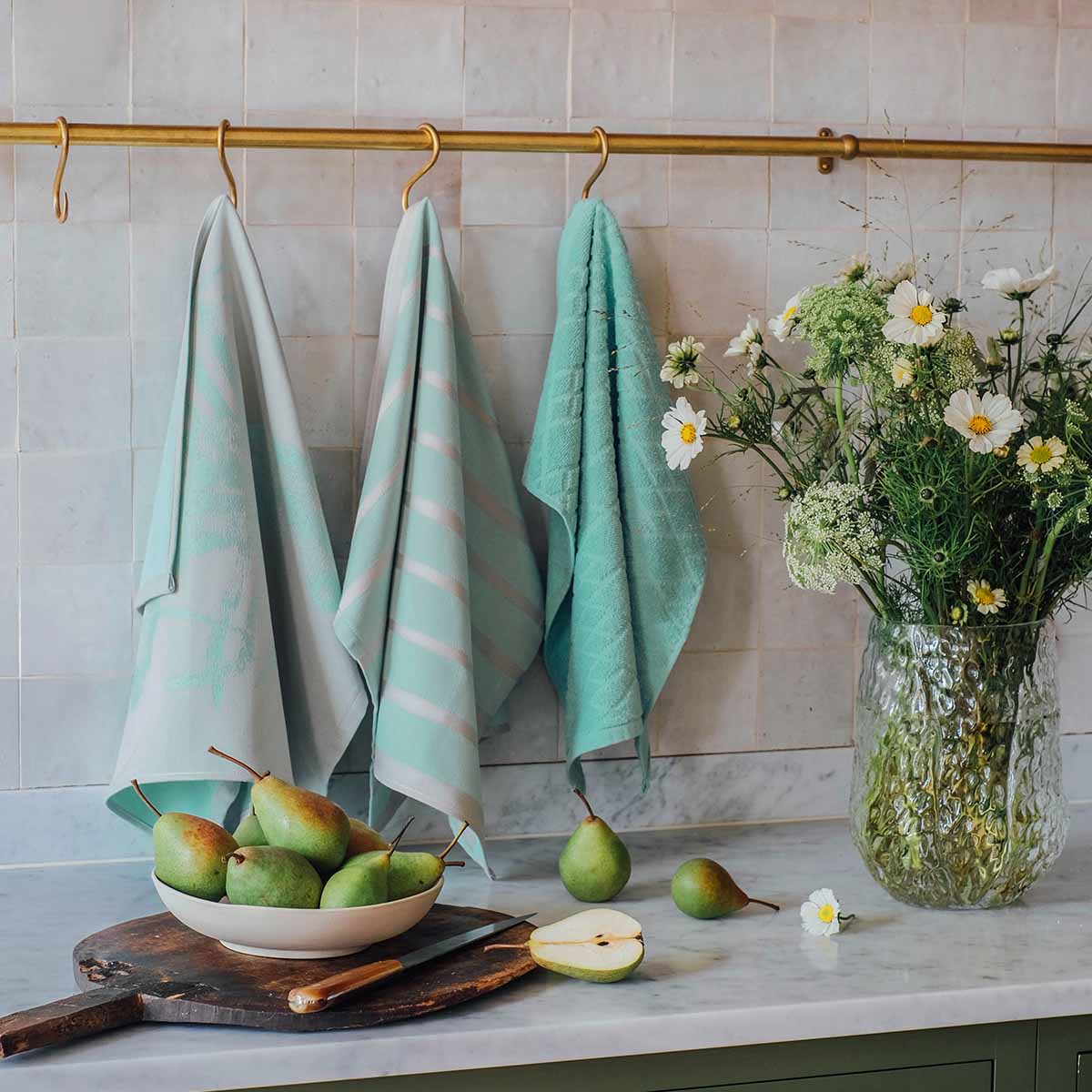
Kitchen towels should be allowed to dry completely, spread out as much as possible, after use. If they are left damp for an extended period, odors can develop more quickly. Dish towels also benefit from being changed regularly and dried thoroughly between uses.
Having several kitchen towels on rotation makes everyday life even easier. While one towel is drying or being washed, a clean one is already ready to use.
Different kitchen textiles require different care
Not every kitchen textile serves the same purpose. That's why it's worth tailoring your care routine to how you use each item.
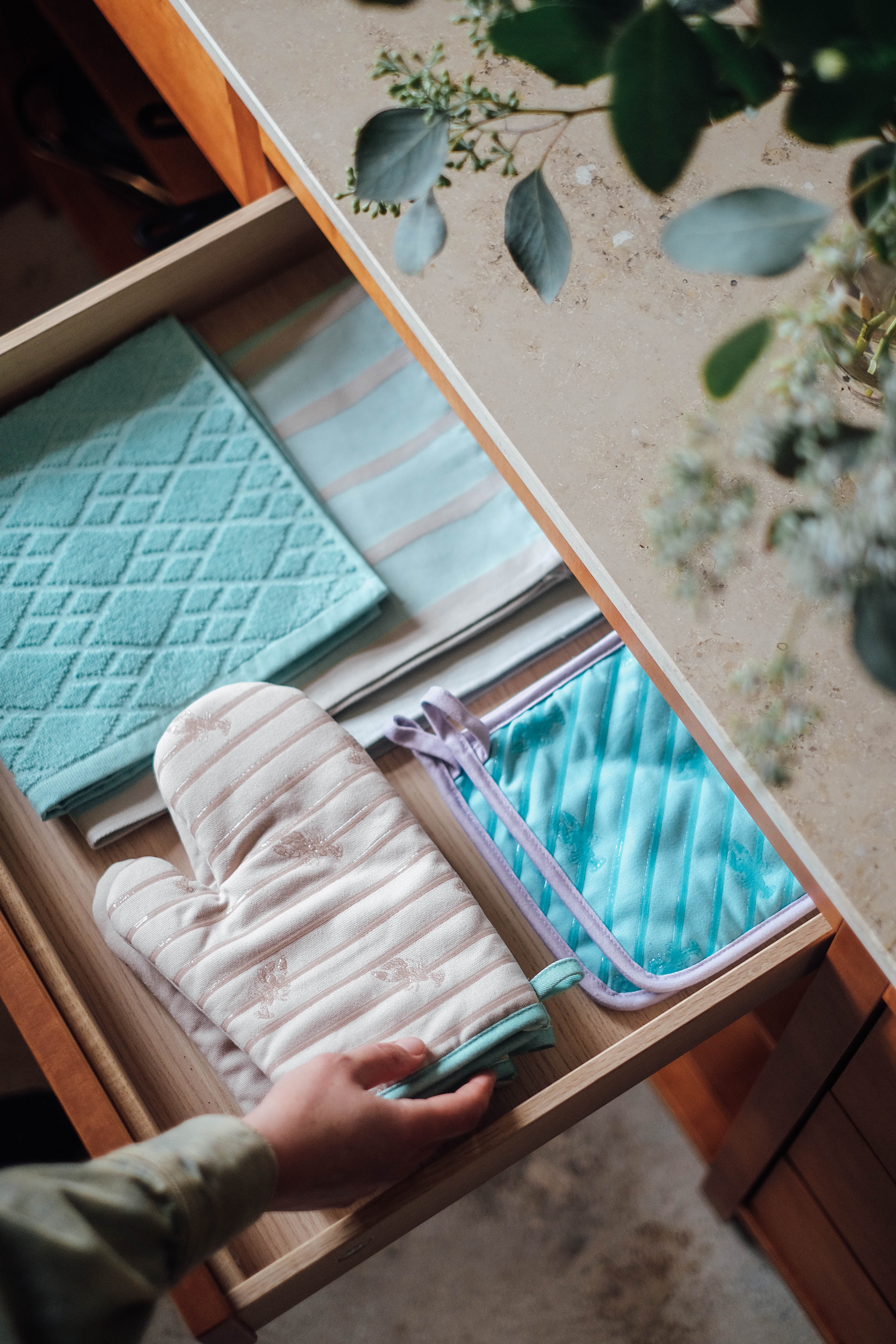
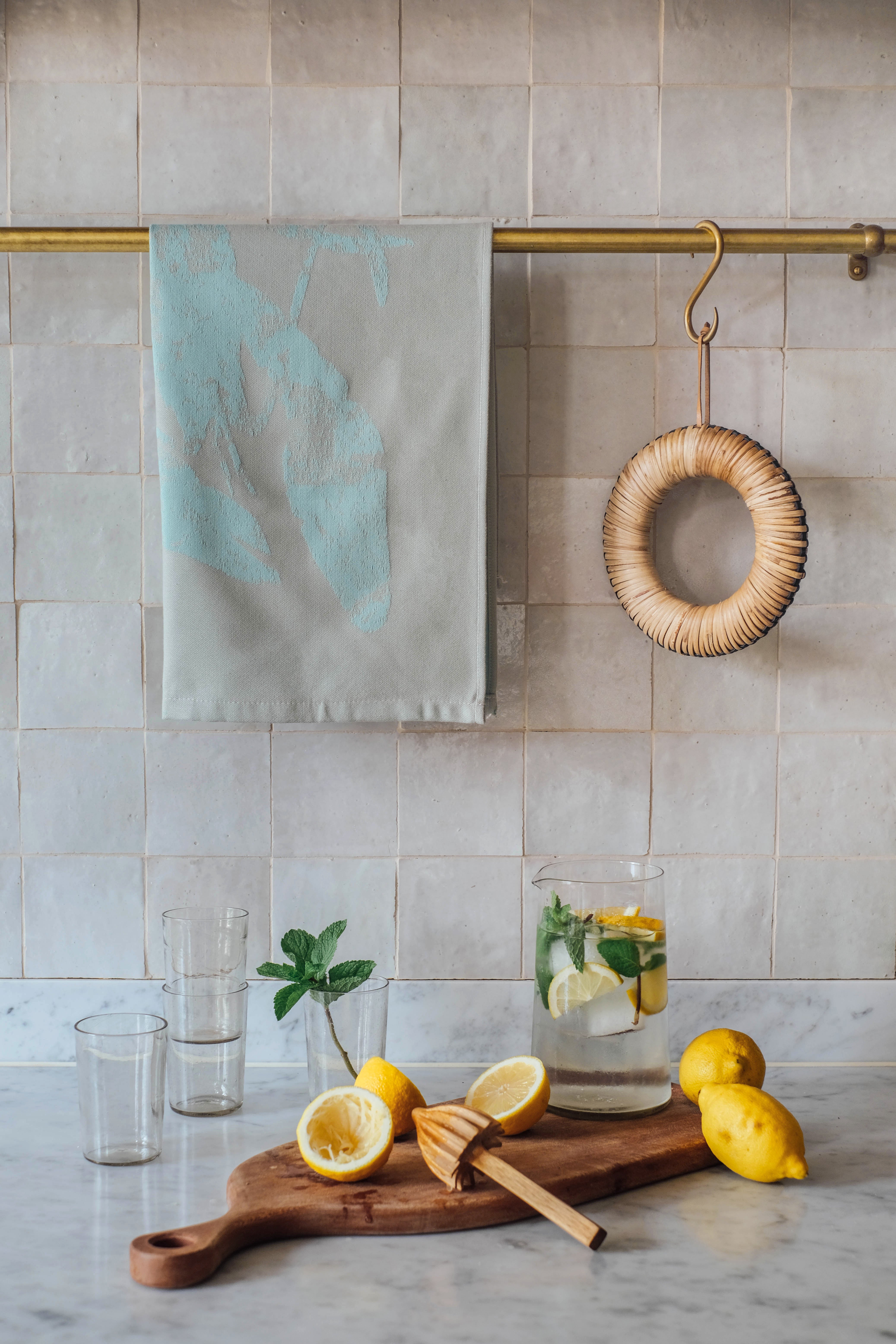
- Kitchen Towels Made of cotton, these kitchen towels reliably absorb moisture and are useful for many everyday tasks. Washing them regularly helps maintain their absorbency and freshness.
- Dishcloths come into direct contact with water, countertops, and dirt. They should therefore be changed and washed more frequently.
- Polishing Cloths are primarily used for glassware, silverware, or delicate surfaces. To preserve their fine texture, it is recommended to care for them according to the manufacturer’s instructions.
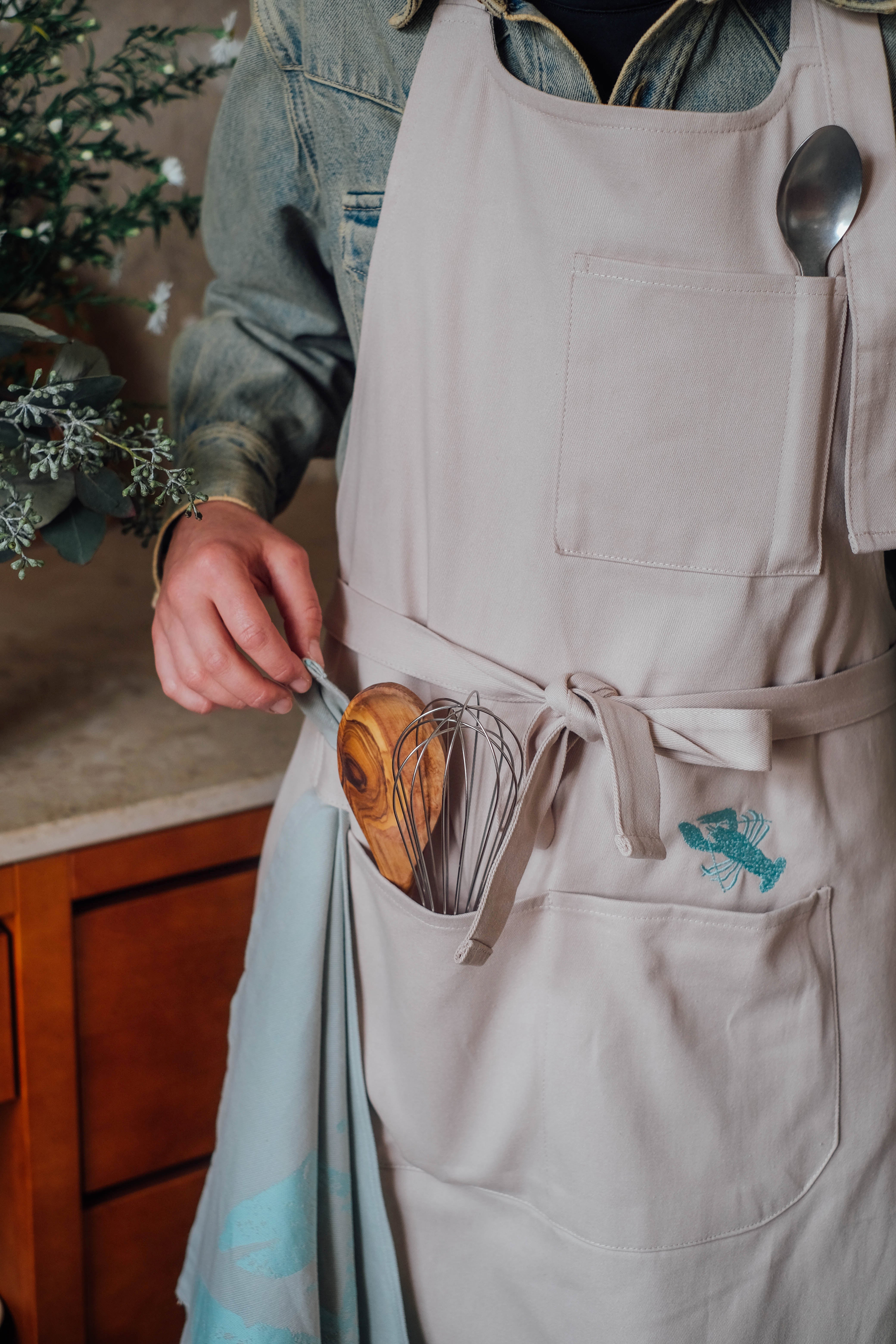
- Aprons, Oven mitts and pot holders usually don’t need to be washed every day. If they’re cleaned regularly and dried thoroughly, they’ll remain comfortable to use for a long time.
Washing kitchen linens is part of normal use
High-quality kitchen textiles are designed to be washed regularly. This not only ensures hygiene but also helps maintain the materials' performance.
Before each wash, it's a good idea to check the manufacturer's care instructions. They provide information on the appropriate wash temperature and help preserve colors, fabrics, and materials for as long as possible.
Sorting by color and avoiding overloading the washing machine also help ensure even washing results.
Why do unpleasant odors develop in kitchen textiles?
Many people are familiar with the problem of kitchen towels no longer smelling fresh, even after washing. The cause often isn't the wash cycle itself.
If damp kitchen towels are left folded up for a long time or aren't washed until several days later, odors can develop more easily. Even after washing, kitchen linens should be hung up as soon as possible so that any remaining moisture can completely dry out.
With these simple habits, kitchen linens will stay fresh much longer.
How to Properly Dry and Store Kitchen Linens
Whether they're kitchen towels, dishcloths, polishing cloths, or aprons: All kitchen textiles should be allowed to dry completely after washing before they are folded or put away.
A well-ventilated area helps the items dry evenly. The textiles should not be stored in the closet until all residual moisture has disappeared.
This simple routine helps keep kitchen linens hygienic and ready for use at all times.
Common Cleaning Mistakes in Everyday Kitchen Life
It's often small habits that shorten the lifespan of kitchen textiles.
These include:
- Leave damp kitchen towels folded up.
- Don't change kitchen towels until later.
- Store wet clothes in the laundry basket.
- Store damp clothes directly in the closet.
- Do not follow the manufacturer's care instructions.
Even small changes in your daily routine can help preserve materials, colors, and functionality for as long as possible.
Why Quality and Care Go Hand in Hand
The lifespan of kitchen textiles does not depend solely on the material. Regular care is just as important.
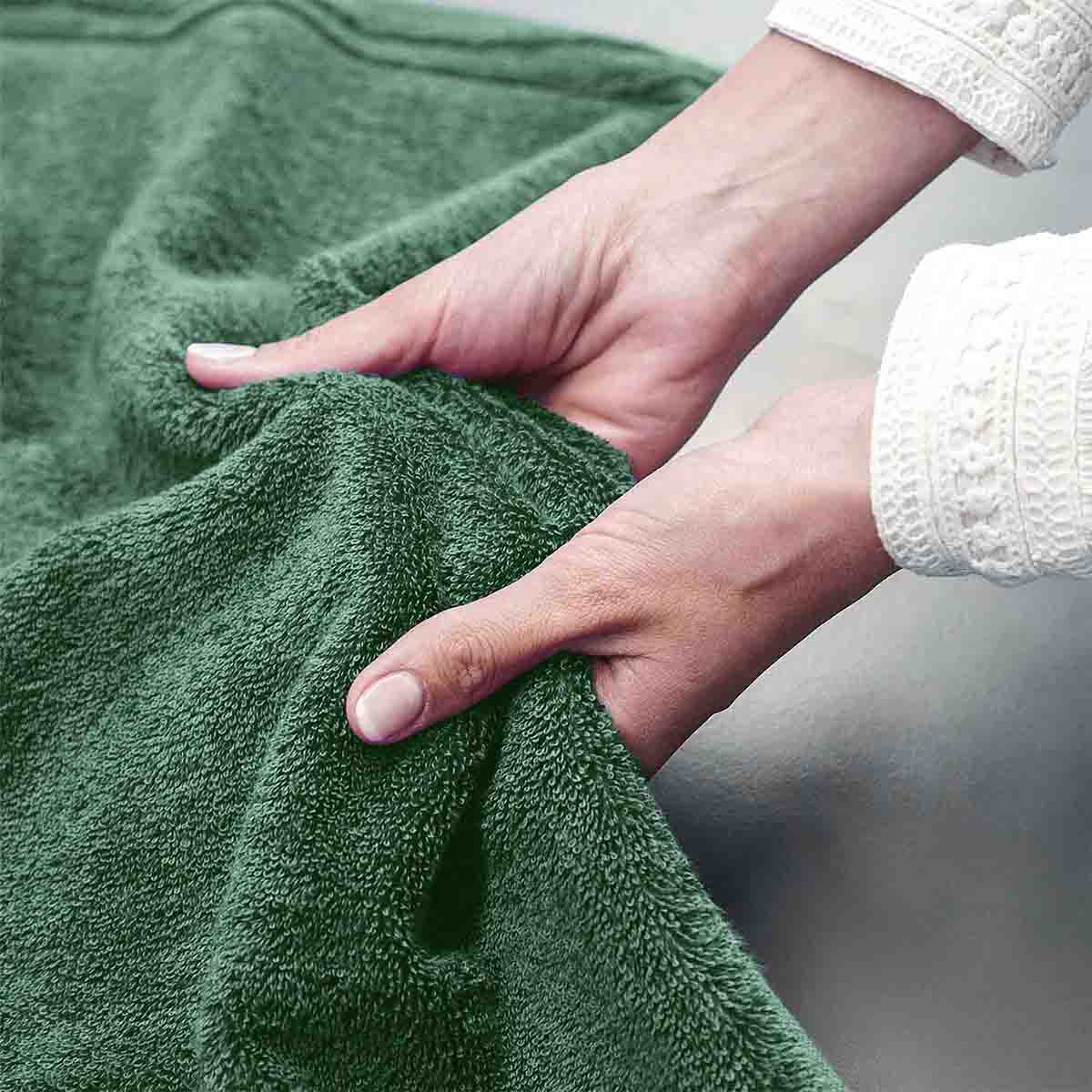
The FLAVOUR & FLAIR Fine Kitchen Collection by VOSSEN is made primarily of high-quality cotton and includes different types of fabric depending on the intended use. Plain-weave fabric dries quickly and is well-suited for many classic kitchen tasks. Terry cloth absorbs a particularly large amount of moisture and is ideal for tasks that require high absorbency.
High-quality materials and careful craftsmanship can help ensure that kitchen textiles retain their function and appearance even after many washes. Proper care creates the best conditions for this.
FAQ - Frequently Asked Questions About the FLAVOUR & FLAIR Fine Kitchen Collection
How often should kitchen towels be changed?
Kitchen towels should be changed regularly. How often you should change them depends on how heavily they are used and what foods or surfaces they come into contact with.
Why do kitchen towels still smell even after being washed?
Odors often develop even before the wash cycle begins. If damp kitchen towels are left lying around for a long time or don't dry completely after washing, unpleasant odors can develop.
At what temperature should you wash kitchen towels?
The appropriate washing temperature is determined by the manufacturer's care instructions. It helps preserve the materials, colors, and functionality for as long as possible.
Are paper towels and dish towels the same thing?
In everyday language, the two terms are often used interchangeably. VOSSEN uses the term "kitchen towels" for the products in the FLAVOUR & FLAIR Fine Kitchen Collection.
Should different kitchen textiles be used separately?
Yes. Kitchen towels, dish towels, and polishing cloths serve different purposes. Using them separately promotes hygiene and helps make the most of each material's specific properties.
Does the quality of kitchen linens make a difference?
Yes. High-quality materials and careful craftsmanship can help ensure that kitchen textiles retain their qualities longer, even with regular use and frequent washing.
Conclusion
Kitchen textiles are used in many everyday tasks and are put through their paces daily. With the right care, they remain hygienic and functional and retain their qualities even after many washes. Often, it’s the little habits—like changing them regularly, letting them dry completely, or following the care instructions—that make a noticeable difference.
High-quality materials, in particular, benefit from care tailored to their specific use. This helps preserve their absorbency, texture, and appearance for as long as possible, ensuring that kitchen textiles reliably fulfill their purpose in everyday kitchen use.