




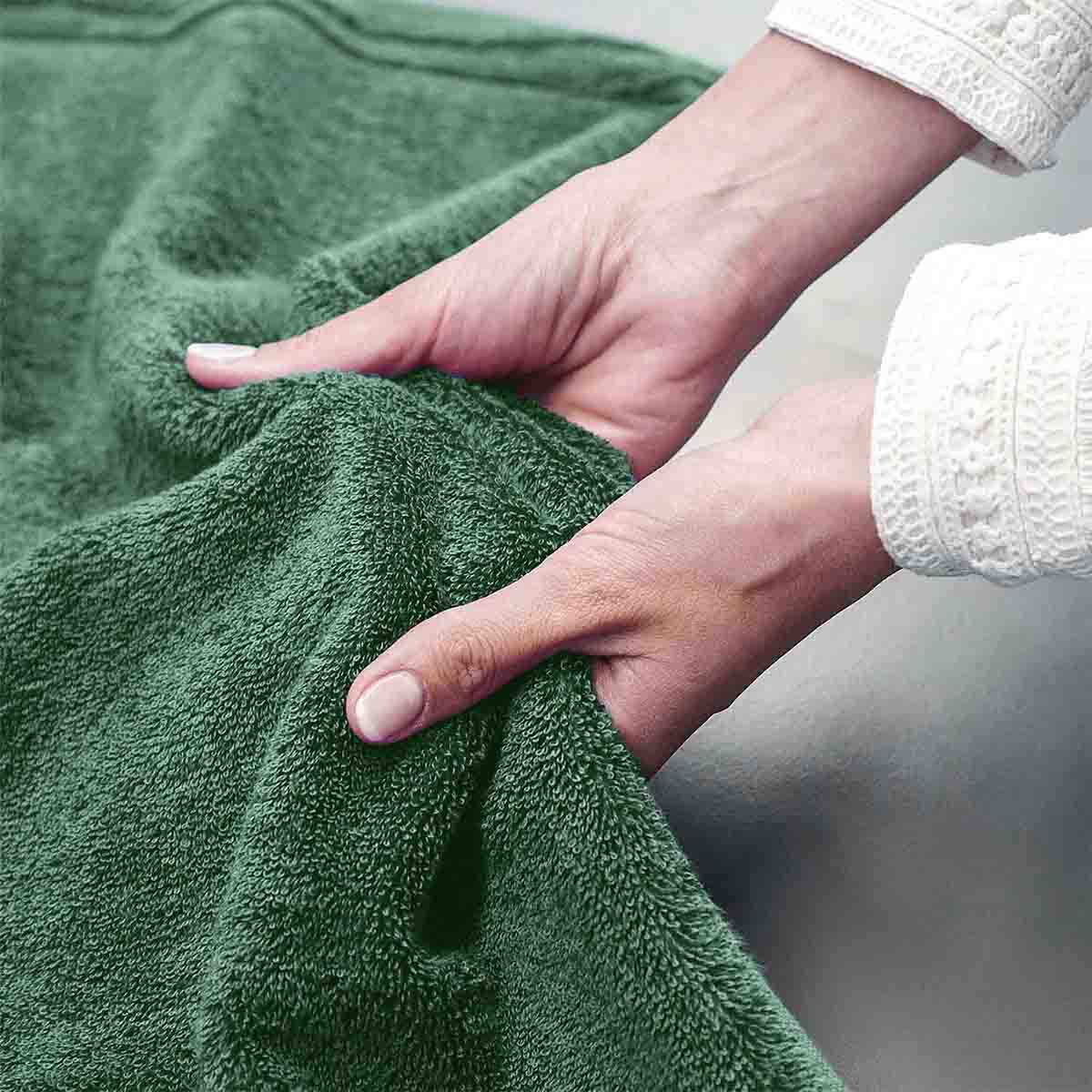




This keeps them soft, hygienic and durable
A towel is used every day. When drying your hands or after showering, it's a natural part of it. And yet you can tell immediately whether a towel feels good or not. Whether it is soft, smells fresh and absorbs reliably. Or whether it feels rough, smells unpleasant and somehow no longer does what it should.
This is exactly where you can see how much influence the right care has. Washing temperature, dosage and drying determine how long a towel retains its function over many years. As an Austrian textile manufacturer with over 100 years of experience in terry towel production, we at VOSSEN deal with precisely these issues on a daily basis.
Why the topic is relevant in everyday life
Towels are among the most frequently used textiles in the household. They come into contact with water, skin, heat and moisture on a daily basis. This combination places high demands on materials and care.
If a towel is washed or dried incorrectly, residues are deposited in the fibers. This not only impairs the feel, but also hygiene and absorbency. At the same time, many towels are unnecessarily stressed, for example due to excessively high temperatures or the wrong additives.
Proper care ensures that towels remain hygienically clean, retain their structure and feel pleasant even after many washes.
Classification and orientation without technical jargon
Cotton towels are generally easy to care for. Their fibers are robust, but not insensitive. They react to three main factors: temperature, chemicals and mechanical stress.
Excessive heat can dry out fibers. Too much detergent leaves residues. Too little movement in the washing machine prevents thorough cleaning. The aim is to achieve a balanced interplay of these factors.
It is also important to consider towels as a separate textile category. They are very different from clothing. They absorb more water, have a thicker weave and therefore require different care conditions.
The right washing temperature depending on use
The ideal washing temperature depends on how intensively a towel is used.
Shower towels and bath towels that are used daily or several times a week should be washed at 60 degrees. This temperature reliably removes skin oils, care products and germs without unnecessarily damaging the cotton fibers.
Towels for hands or face can also be washed at 60 degrees, especially if used frequently. With light use and very regular changes, 40 degrees is also possible. It is important to plan another 60 degree wash cycle at regular intervals.
Guest towels or rarely used towels can be washed at 40 degrees, provided they are stored dry and do not hang damp in the bathroom.
Washing temperatures above 60 degrees are hardly necessary in a normal household. They put a lot of strain on the fibers, cause colors to fade more quickly and shorten the lifespan.
The first wash of new towels
New towels should always be washed before first use. During production, excess fibers and finishes remain in the fabric, which only come off during washing.
Ideally, the first wash should be at 60 degrees, without fabric softener and with a normal amount of detergent. New towels may shed a little fluff at first. This is not a quality defect, but part of the washing process and will disappear after one or two washes.
After the first wash, the cotton becomes more absorbent and the towel performs its function better.
Maintaining softness without fabric softener
Fabric softener is one of the most common reasons for a decline in towel quality. It coats the fibers with a film that may appear soft in the short term, but in the long term it reduces absorbency and promotes odors.
Real softness comes from clean, flexible fibers. Three things are crucial for this: the correct dosage of detergent, sufficient space in the washing machine and gentle drying.
The washing machine should not be overfilled. Towels need space to move around. A moderate spin speed is gentle on the fibers and prevents unnecessary compaction.
During drying, movement ensures that the fibers straighten up again. This happens automatically in the dryer. When air drying, it helps to shake the garment vigorously before hanging it up.
Avoid odors through proper care
Musty towels are almost always caused by trapped moisture or detergent residue.
The time between use and washing also plays a role. Towels should always be allowed to dry completely after use. If they are stored damp, for example folded or placed in the laundry basket too early, odors will develop more quickly.
If towels already smell, a wash cycle at 60 degrees with the correct amount of detergent will often help. Additional fragrances only mask odors for a short time and do not solve the problem.
Drying and storage
The faster a towel dries, the better it is for hygiene and the material. Well-ventilated rooms or drying outdoors are ideal.
A gentle program with a moderate temperature is recommended in the dryer. Excessive heat can make cotton fibers brittle.
Towels must be completely dry before putting them away in the cupboard. They are best stored loosely, without strong pressure. This way they retain their volume and feel.
Typical everyday care mistakes
Many problems arise from well-intentioned but unfavorable habits:
- Too much detergent leads to deposits in the fabric.
- Overfilled washing machines do not clean thoroughly.
- Fabric softener damages the function in the long term.
- Damp towels in the laundry basket promote odors.
- Continuous washing at low temperatures is not hygienically sufficient.
If you pay attention to these points, you will avoid most care problems by yourself.
Why good workmanship makes all the difference
High-quality towels are designed to be washed regularly. Their quality is not evident when they are new, but after many washes. When colors remain stable, the fibers are elastic and the towel continues to dry reliably.
Carefully processed cotton, sophisticated weaves and manufacturing experience make towels more resistant in everyday use. At VOSSEN, we have been producing terry products like these in Austria for decades, with a focus on long-lasting quality rather than short-term effects.
FAQ: Frequently asked questions about towel care
How often should towels be washed?
Shower towels after two to three days, hand towels every day or every two days, depending on use.
Why do towels become rough over time?
Often due to detergent residue or too little movement during washing. Very hot drying can also harden the fibers.
Why do towels smell despite washing?
Usually due to drying too slowly or detergent residues in the fibers.
Is 40 degrees hygienic enough?
For light use, yes. For heavily used towels, 60 degrees is better.
Should towels be washed separately from clothes?
Yes, towels require more space and different care conditions than clothes.
Is the tumble dryer harmful to towels?
No, with a moderate temperature and gentle program it is even helpful for softness.
How do you make hard towels soft again?
It often helps to wash them once or twice at 60 degrees with a little detergent and without fabric softener. This can loosen residues and the feel usually becomes softer again.
Conclusion
Washing towels properly means understanding how to use them. Cleanliness, drying and material care go hand in hand. If you wash, dose and dry with care, you will get towels that will serve their purpose for a long time. Not with effort, but with knowledge and attention in everyday life. This is precisely why VOSSEN develops textiles that will last for many years.